

CULTURE SHOCK ABROAD
Branching Scenario based eLearning
Training for students who are preparing to embark on their study abroad program that educates them about the four stages of culture shock, varying severity levels and possible outcomes.
audience
University of Minnesota students who have filled out an initial intake form at the Learning Abroad Center and are considering, or actively preparing for their study abroad experience.
Responsibilities
Learning Experience Design
Graphic Design
Storyboarding
Prototyping
eLearning development
Tools
Articulate Storyline 360
Adobe Photoshop & Illustrator
Adobe Premiere Pro & Audition
Midjourney
Elevenlabs

Problem
Students preparing to study abroad often receive logistical information, but not enough practical preparation for the emotional and social stress that can happen once they arrive. The module addresses that gap by helping learners recognize the four stages of culture shock, identify common stressors such as language barriers, homesickness, academic pressure, financial stress, and discrimination, and understand when those issues may become mild, moderate, or severe before they escalate. The storyboard frames the learning goal around giving students practical responses to study-abroad challenges, not just definitions.

solution
I designed Culture Shock Abroad as an interactive e-learning experience that moves learners from concept-building into decision-making. The module introduces culture shock through clear objectives, teaches the four stages through clickable layered interactions, reinforces key ideas with short knowledge checks, and then branches into realistic study-abroad scenarios where students practice choosing appropriate responses. This structure turns a broad emotional topic into something learners can actually navigate: recognize what is happening, name the stressor, judge the severity, and choose a practical next step.
MY PROCESS
1
Identify the Need
I began by identifying the core learner need: helping study-abroad students recognize culture shock, common stressors, severity levels, and practical responses before problems escalate.
2
Find the Solution
I structured the module around clear concept teaching, quick knowledge checks, and branching scenarios so learners could move from understanding culture shock to practicing realistic decisions.
3
Design the Experience
I built the experience as an interactive Storyline-style module with clickable layers, feedback screens, scenario paths, and a final quiz to reinforce confidence and practical application.
Define the goal
From concept to sketch to story
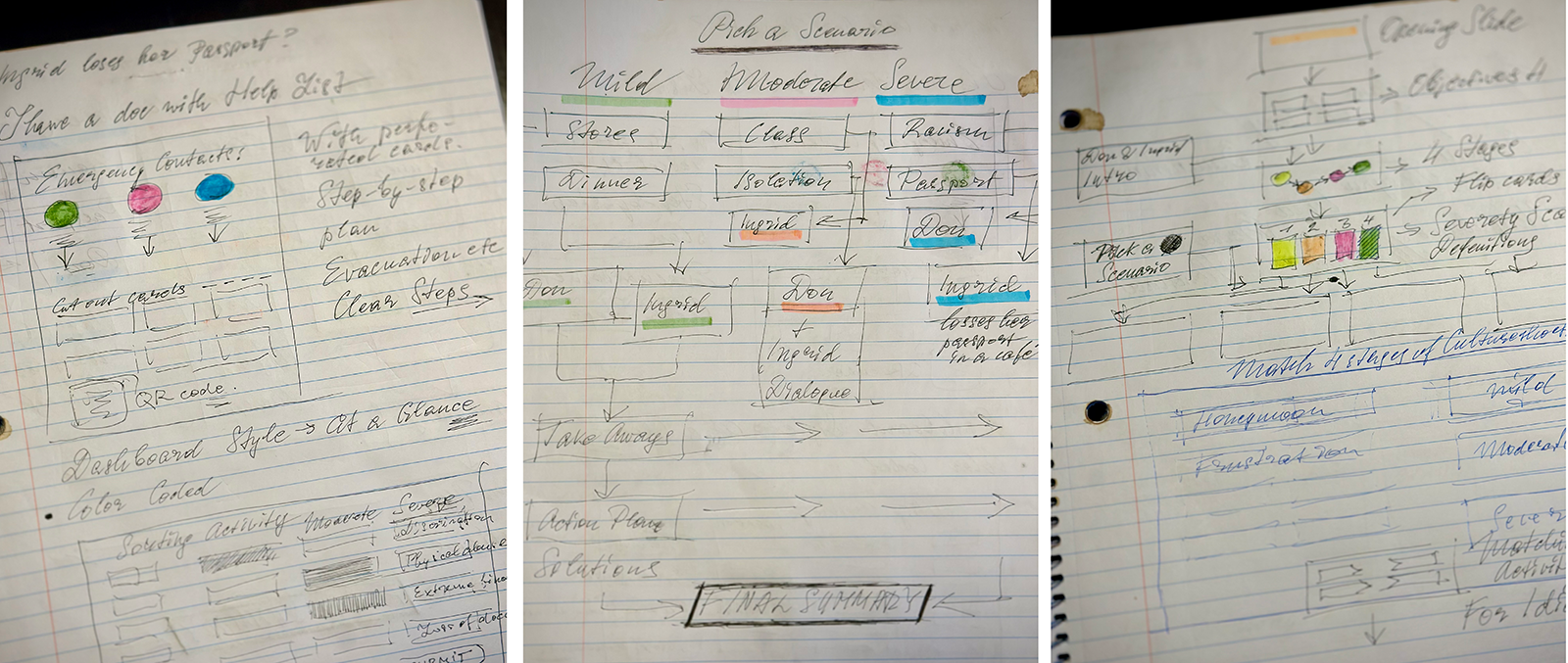
I identify the need, the core skill gaps and pain points. Then I start sketching out a storyboard by hand which allows me to ideate quickly and try out multiple scenarios. This part is the most experimental. Drawing is visual brainstorming, so a lot of interesting and unexpected concepts come up at this stage. This is also where I make the most radical changes.
Design the solution
Text-based Storyboard
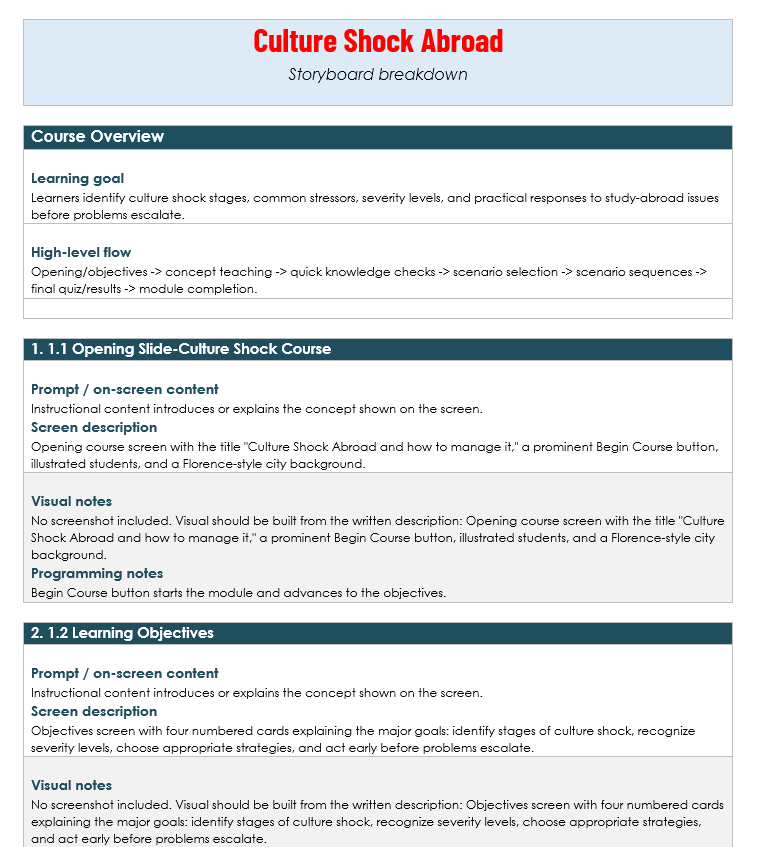
After identifying the key actions, I craft a text-based storyboard centered around the culture shock abroad branching scenarios.
I outline the introductory slides that introduce the user to the four stages of culture shock, provide realistic examples and lead them to the 6 branching scenarios of culture shock varying in severity levels.
Mindful of the theme's sensitive and nuanced nature, I incorporated a positively-worded trigger warning to prepare learners for potential discomfort.
I base the branching scenarios in actual reported cases student feedback changing the student names and locations of places.
develop the experience
Finding the right style
It was important for me to find art direction that would match the theme and the feel of the topic. I went through a lot of iterations making sure I capture the correct mood. Our research indicated that Gen-Z don’t respond well to curated, polished stock photography, so I wanted to find a more stylized illustration style that feels more authentic, hand painted and personal.
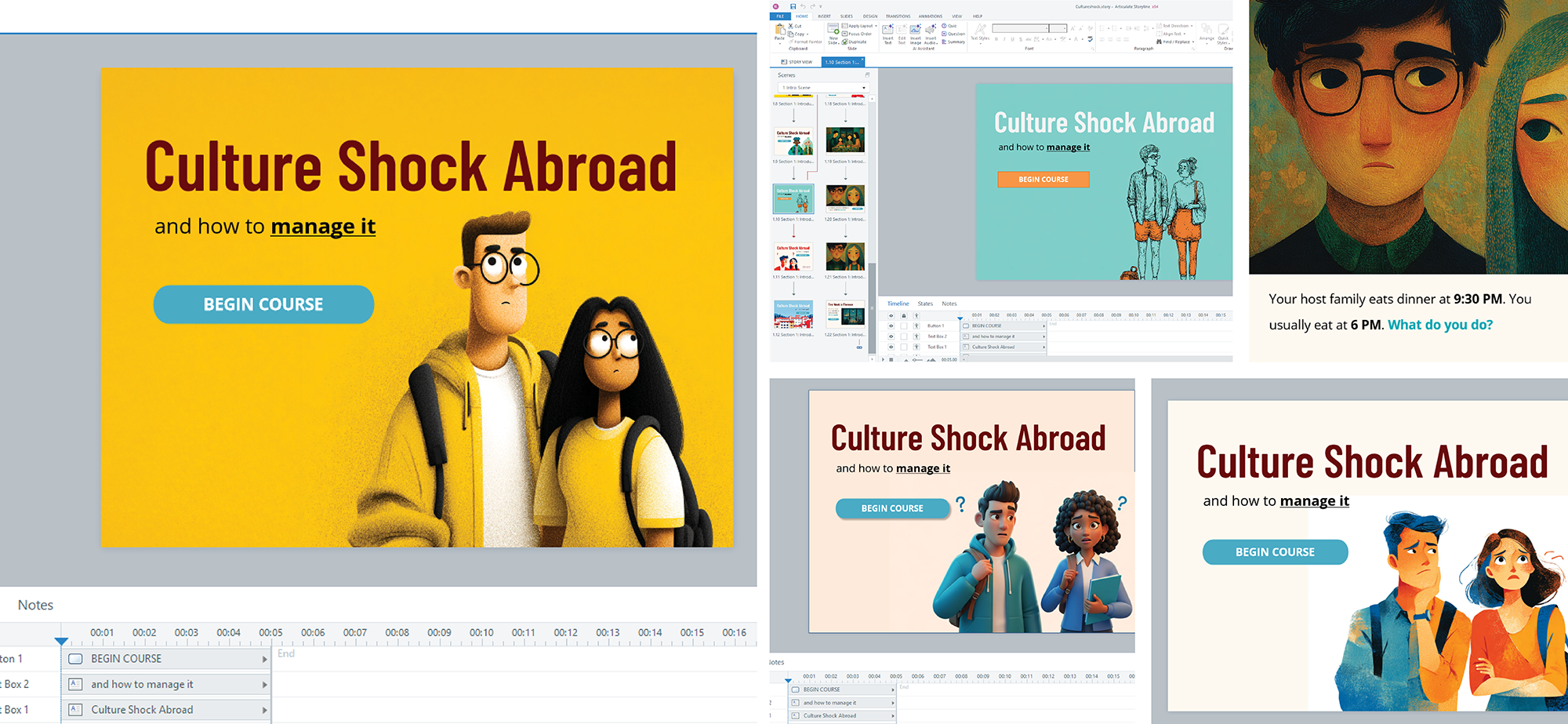
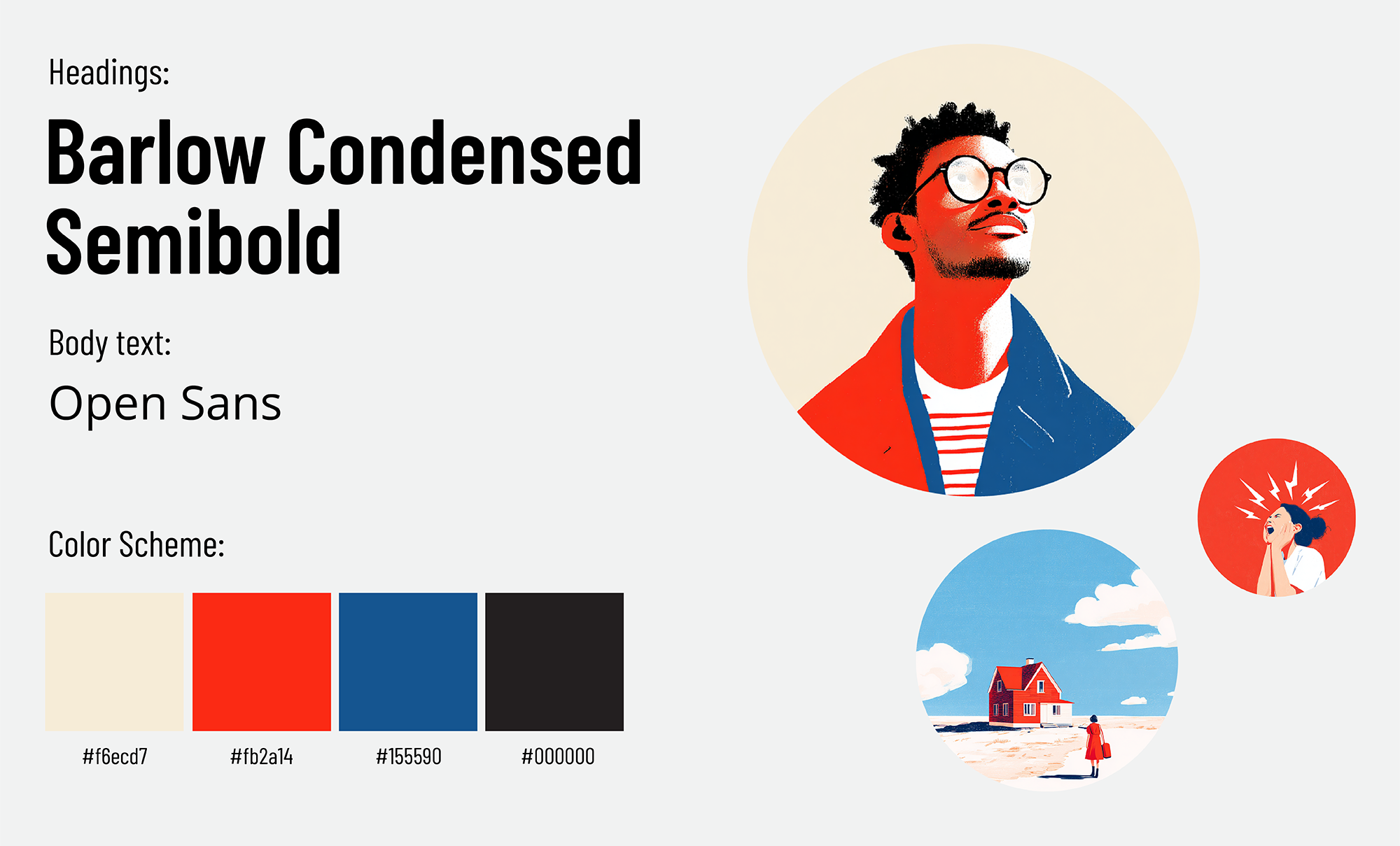
I tried various illustration styles: from fairly refined and detailed to minimalist and simple, finally settling on one that struck a nice balance of visual clarity and painterly expression. This style would allow me to capture the rustic, textured feel of Florence while also creating a sense of tension and even alarm to mimic the types of emotions culture shock evokes .This is why I picked a warm/cool, red/blue color palette with beige acting as a neutral background color.
I picked a complimentary pairing of Barlow Condensed Semibold for headers and Open Sans for body text to give the module a clean, easy to navigate visual aesthetic that would not distract the user from the learning experience.
CHARACTER DEVELOPMENT
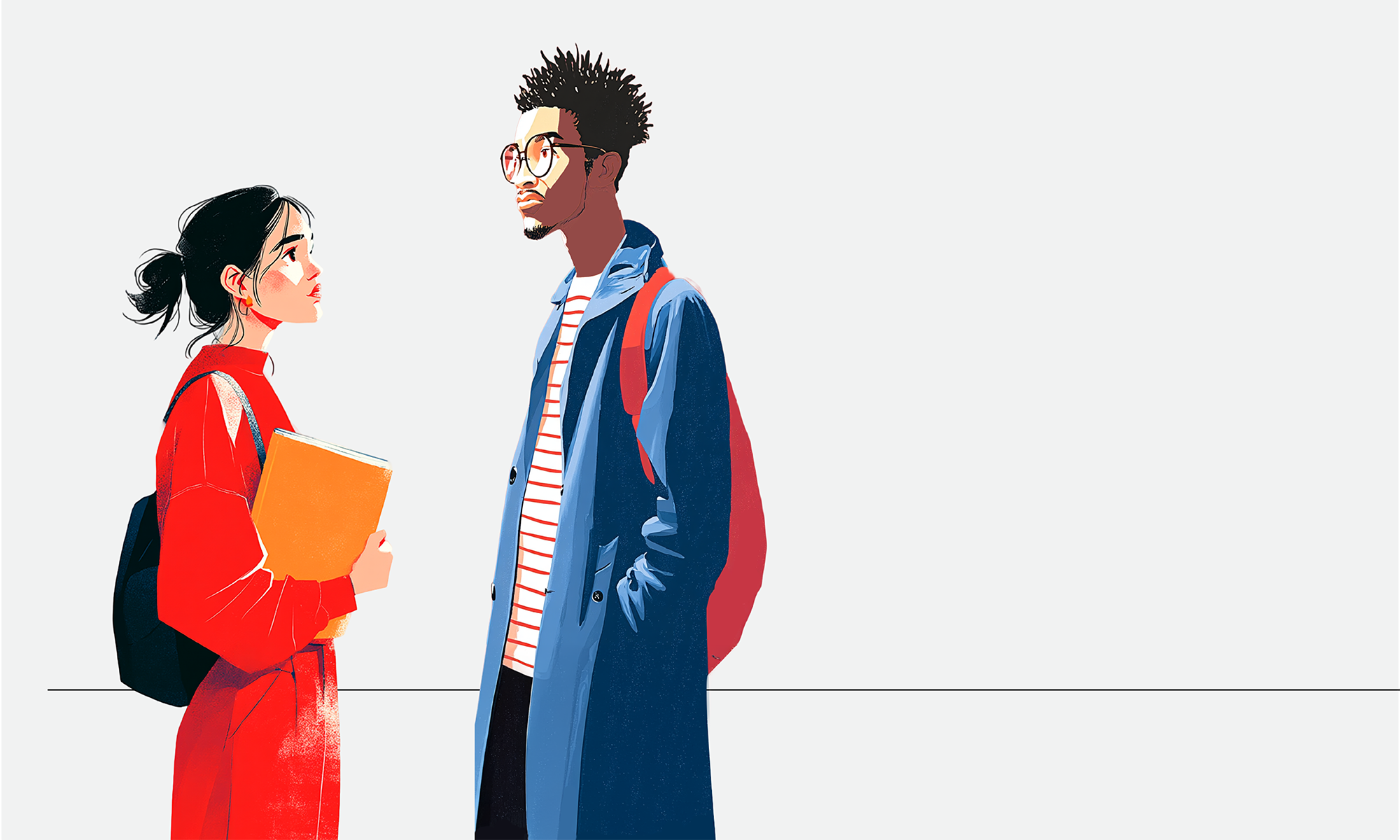
Finding the right Ingrid and Donovan
Through my iterative development and storyboarding I wanted to have a diverse cast of characters to drive the narrative and branching scenarios forward making them more realistic and relatable. I finally settled on two characters: a Black man named Donovan and a Caucasian female named Ingrid that would resonate with the diverse University of Minnesota student population.
They are dressed in boxy Gen-Z inspired clothing and wear complimentary colors: a warm red and a cool blue, which also subconsciously ties them to the colors of the American flag, emphasizing where they came from and what culture they represent.
Prototyping
DEVELOPING A style guide
To gather feedback on functionality and interactivity, I designed a rich prototype featuring animations, sound effects, and diverse scenes, providing a holistic experience for testing purposes.
I incorporated ambient sound effects, such as whispers, discussions, and door slams, to emulate a realistic and dynamic atmosphere.
Custom motion paths, like shakes, were also introduced to simulate surprising moments.

iterating & incorporating feedback
Before/After
A/B testing. Receiving and incorporating feedback. Show before & after.
production
The Build
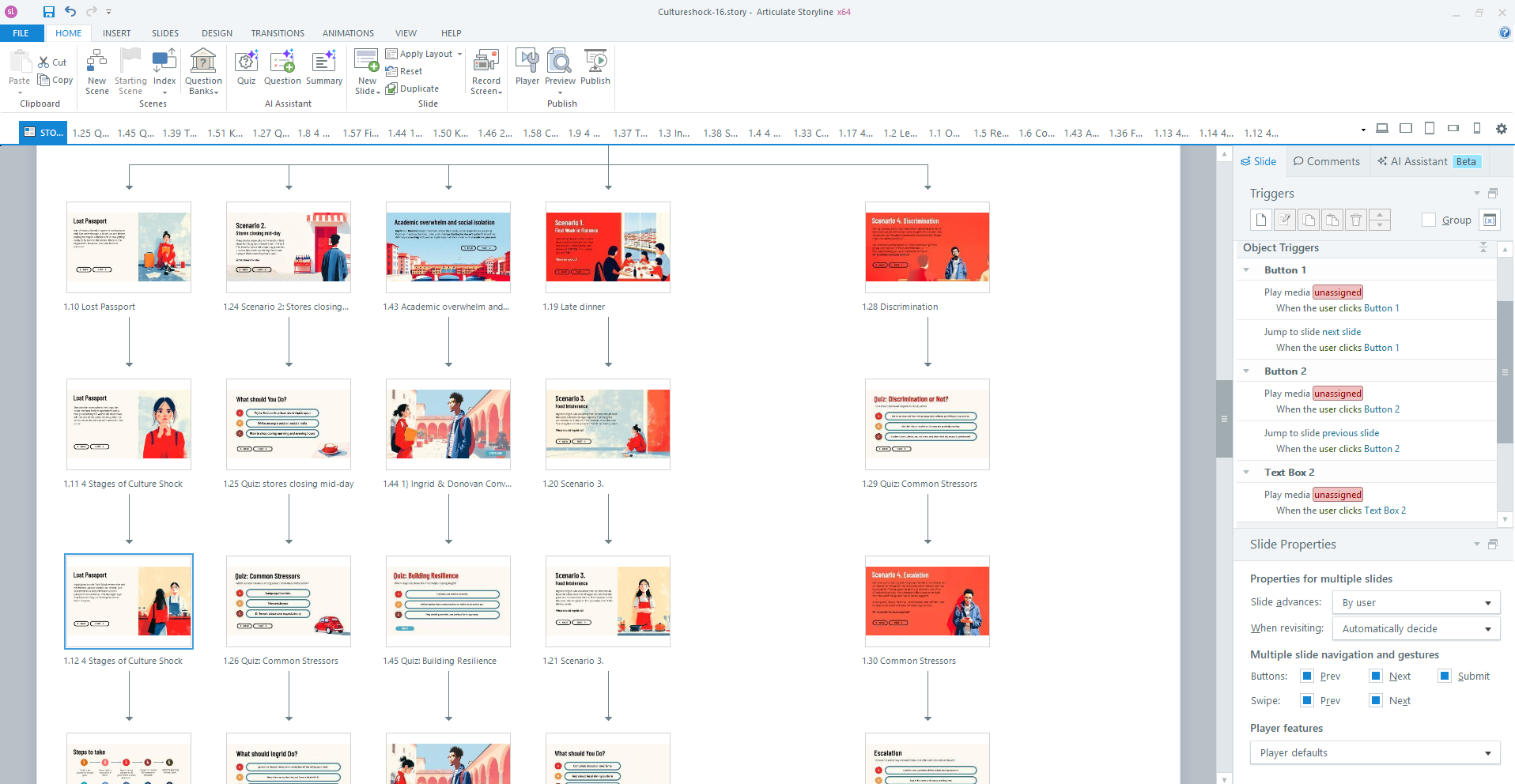
Using feedback from the prototype, I developed the final product in Articulate Storyline 360, piecing together the content and multimedia assets. To ensure optimal functionality and user experience, I tested the product with users extensively before delivery.
Based on the feedback, this scenario-based eLearning experience provides an effective and practical solution for resolving cultural conflicts in the classroom.

Results & Takeaways
Testimonials
After launch we received positive feedback from students, who stated that the module was very informative and easy to navigate and digest. The scenarios were engaging and realistic. Overall students mentioned that they were better prepared for the emotional burden that study abroad brings with some even reporting experiencing similar circumstances that are featured in the module.